
Haiti in Crisis: Security, Deportations & Survival
Mercenaries, grounded flights, and lawmakers push back—here's what's happening


|
Welcome to HDP Haitian Community weekly news!
This week brings difficult but essential news for our community: the Kenscoff massacre that claimed 47 lives, escalating deportations of Haitian families, and urgent questions about who profits from Haiti’s security crisis. As your diaspora voice, we’re cutting through the noise to bring you accountability journalism, legislative advocacy updates, and the stories that matter most to Haitian families worldwide.
What’s in this issue:
- 🚨 After 17 months and 1,243 deaths: What has Erik Prince’s privatized security delivered for Haiti?
- ✈️ The cruel contradiction: Too dangerous for US flights, but “safe enough” to deport 200,000 Haitians
- 🏛️ Haiti Caucus Co-Chairs fight back with TPS legislation and urgent Senate call-to-action
- 📊 UN mandate deadline looms as gangs control 70% of Port-au-Prince
- 💔 South Florida’s 150,000 TPS holders move into the shadows amid terror and uncertainty
💡 Quote of the Day
“This administration’s policy robbed this young man of his humanity. Pierre Damas Bel deserved better. Every Haitian family deserves better than deportation into violence and dehumanization.”
— Congresswoman Ayanna Pressley, Co-Chair of House Haiti Caucus, mourning 20-year-old TPS holder Pierre Damas Bel
📰 Latest News
🔗 Haiti, Erik Prince, and the Cost of Privatized Security (6 minute read)
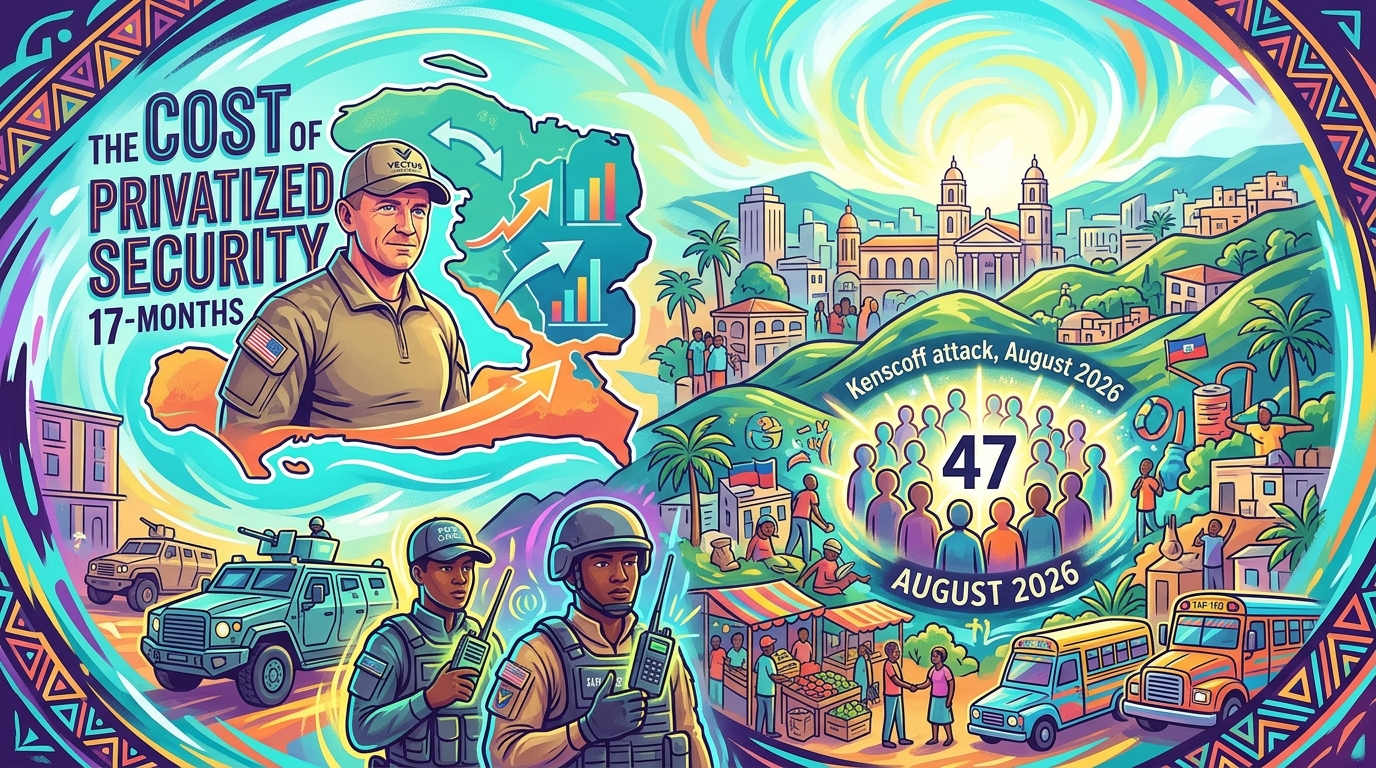
After 17 months of Erik Prince’s Vectus Global operating in Haiti with promises of restored security, the devastating August 2026 Kenscoff massacre killed 47 people and exposed the strategy’s failures. Prince promised ordinary citizens could safely travel from Port-au-Prince to Cap-Haïtien within a year—that benchmark remains unmet. Human Rights Watch documents a staggering human cost: 1,243 deaths from drone operations, including 17 children and 43 non-gang members.
Key Points:
- Vectus Global has operated for 17 months with no measurable security improvements or met benchmarks for civilian safety
- Human Rights Watch reports 1,243 deaths from drone operations, including 17 children and 43 innocent civilians
- Complete lack of transparency regarding financial terms, performance metrics, and accountability mechanisms raises sovereignty concerns
- The Kenscoff attack that killed 47 people demonstrates the continued failure of privatized security approaches
Why it matters: Haitian families in the diaspora deserve answers about who profits from Haiti’s instability. After 17 months and the Kenscoff tragedy, where are the results Erik Prince promised? The lack of transparency about costs, metrics, and accountability raises fundamental questions: Does this privatized approach serve Haitian interests, or does it perpetuate profitable chaos while our families remain unsafe? This is accountability journalism our community needs to demand action.
🔗 Haiti – US Extends Flight Ban On Port-au-Prince As Deportations Continue (4 minute read)
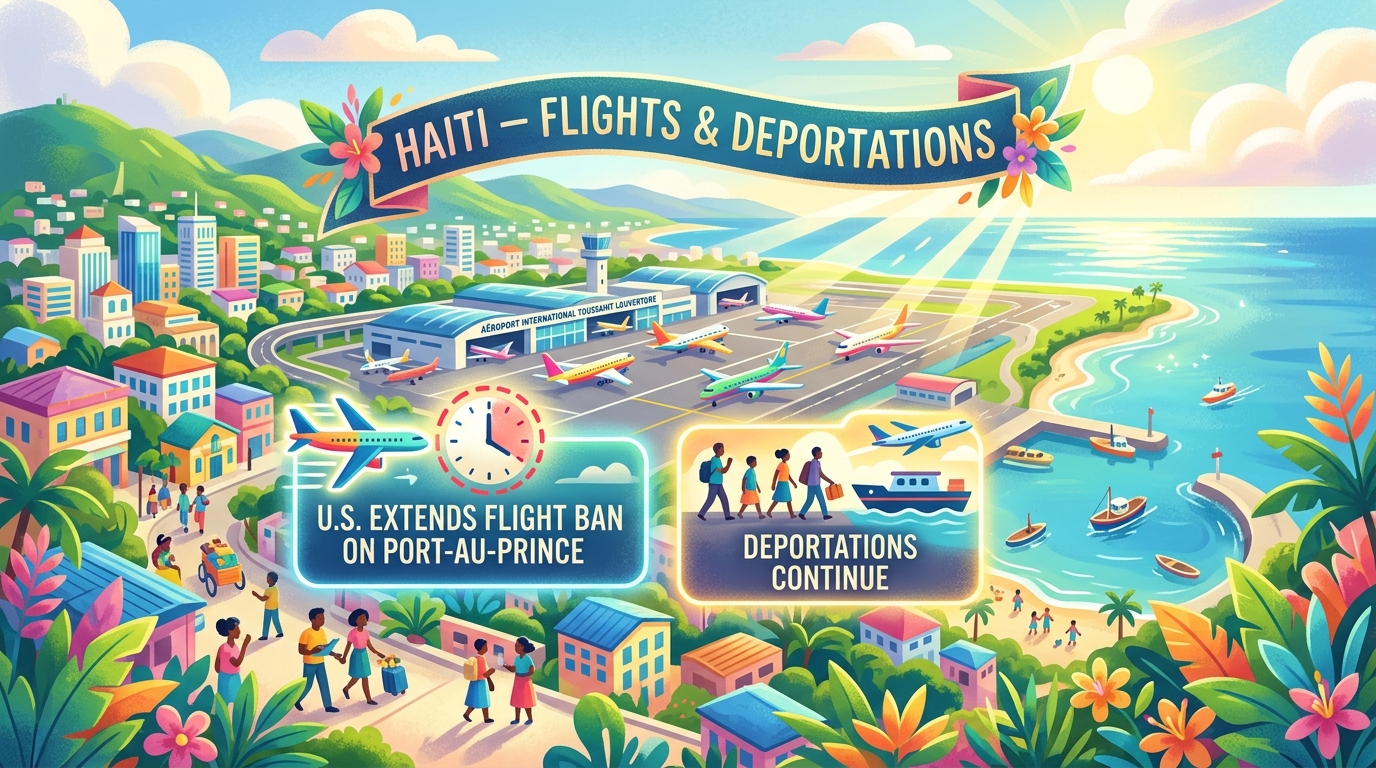
The U.S. Federal Aviation Administration extended its flight restriction over Port-au-Prince through March 2027, citing escalating gang violence that threatens aircraft safety—gangs now control approximately 70% of the capital. Yet in a stunning contradiction, the Trump administration continues deporting Haitians to the country, routing flights through Cap-Haitien instead. Nearly 200,000 Haitians were forcibly returned during the first eight months of 2026, exceeding all of 2025.
Key Points:
- FAA extends Port-au-Prince flight ban through March 2027 after November 2025 incident when gunmen fired on Spirit Airlines flight
- Gangs control approximately 70% of Port-au-Prince, making it too dangerous for commercial aviation
- Despite extreme danger, Trump administration deported nearly 200,000 Haitians in first 8 months of 2026—more than all of 2025
- Deportation flights rerouted through Cap-Haitien in northern Haiti, bypassing the flight ban’s safety concerns
Why it matters: Too dangerous to fly, but safe enough to deport? This policy contradiction exposes the cruel reality facing our community. If Port-au-Prince is so dangerous that the FAA bans flights to protect airline passengers through March 2027, how can the same government justify sending 200,000 Haitians back into that violence? For diaspora families, this affects your ability to visit loved ones, the safety of deported relatives, and the fundamental question of whether your government values Haitian lives equally.
🔗 Haiti Caucus Co-Chairs Pressley and Clarke Condemn Deportation and Dehumanization of Haitian Nationals (12 minute read)
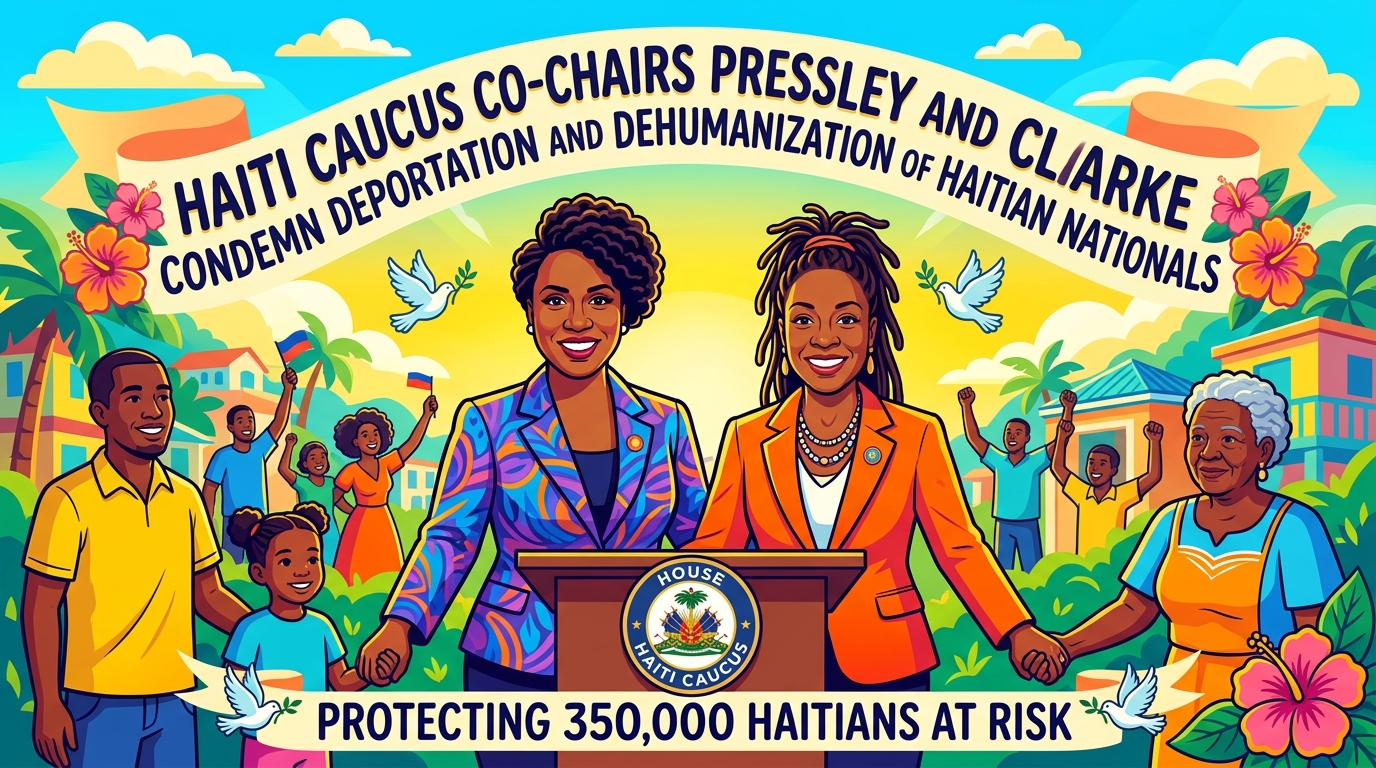
Congresswomen Ayanna Pressley and Yvette Clarke, co-chairs of the House Haiti Caucus, issued a powerful condemnation of the Trump Administration’s deportation of Haitian nationals, warning that over 350,000 are at risk of job loss and deportation. They criticized the administration for deporting Haitians to a country the State Department itself deems unsafe, where gang violence has already killed some deportees. The lawmakers are urging the Senate to immediately pass legislation restoring Temporary Protected Status (TPS) for Haiti.
Key Points:
- Over 350,000 Haitians at risk of deportation despite State Department warnings that Haiti is unsafe
- Pressley championed bipartisan House legislation extending TPS that passed 224-204 in April 2026
- Some deportees have already been killed by gang violence upon return to Haiti
- Haiti Caucus Co-Chairs leading months of advocacy efforts and urgent Senate call-to-action for TPS restoration
Why it matters: Your advocates in action. Congresswomen Pressley and Clarke are fighting for our community with concrete legislative action—the House already passed their bipartisan TPS bill 224-204. Now the battle moves to the Senate. This shows you have champions in Congress, but they need our voices amplified. Contact your Senators and demand they pass TPS restoration immediately. This isn’t just policy—it’s about protecting 350,000 Haitian families from deportation into documented violence.
🔥 Trending
-
Haitian government calls for UN mandate renewal: Haiti’s Foreign Ministry urgently calling on UN Security Council to renew Gang Suppression Force mandate before September 30 deadline, as 1,408 people killed in just three months and December elections threatened by instability
-
South Florida Haitians living in fear: Little Haiti’s 150,000 TPS holders avoiding church, skipping work, livestreaming services from home as community faces unprecedented depression and fear of ICE arrests
-
US-born children deported with Haitian parents: Deportation flights doubled to twice weekly, including one-year-old US citizen deported with parents, as administration accelerates removals despite 1.47 million displaced in Haiti
-
Washington Post editorial on failed international security: One year after UN-backed Gang Suppression Force deployment, gangs still dominate Haiti, raising urgent questions about international accountability
⚡ Quick Hits
🎯 Pierre Damas Bel: The Human Cost of TPS Termination
Congresswoman Pressley mourned 20-year-old Haitian college student and athlete Pierre Damas Bel, who died by suicide after TPS termination and ankle monitor placement. His death highlights the psychological trauma and dehumanization inflicted by immigration policy on vulnerable Haitian youth. (Read more)
🎯 Virtual Visit Home: Cap-Haïtien in 4K
Experience Cap-Haïtien’s vibrant streets, bustling markets, and authentic Caribbean culture through this immersive April 2026 walking tour. For diaspora members unable to travel due to flight restrictions, this 4K journey offers a visual connection to Haiti’s historic northern cultural heartland. (Read more)
🎯 The Untold Story: Haiti, Voodoo, and Poland
September 30 lecture in LA explores the fascinating connection between Haiti’s revolutionary movement and Polish soldiers who fought for Haitian freedom. Dr. Andrey Brylak traces how a religious painting traveled from Poland to Haiti’s Voodoo pantheon and the hidden village of Cazale—untold stories of Haiti’s revolutionary heritage. (Read more)
🎯 Behind the Headlines: Reporting from Port-au-Prince
Award-winning journalist Juan José Martínez D’Aubuisson discusses the extraordinary challenges of ethnographic journalism in Haiti, where “moving one block in Port-au-Prince was equivalent to traveling 1,000km elsewhere.” His insights reveal the dedication required to bring diaspora communities accurate reporting from conflict zones. (Read more)
🎓 Industry Insight
Understanding Haiti’s Security Crisis: What the Numbers Really Mean
When you read that gangs control “70% of Port-au-Prince,” what does that actually mean for your family members still in Haiti? It means that in the capital city where roughly 3 million people live, armed gangs effectively govern the majority of neighborhoods—controlling movement, commerce, and daily survival. The 1,408 people killed in just three months (April-June 2026) represents an average of nearly 16 deaths per day from gang violence alone.
The displacement crisis is equally staggering: 1.47 million internally displaced Haitians means roughly one in eight Haitians has been forced from their home. For diaspora families, this likely means someone you know—a cousin, a neighbor from your hometown, a classmate—is now living in a displacement camp or has fled to the countryside. These aren’t abstract statistics; they’re your extended family and community networks being systematically destroyed.
The September 30 UN mandate deadline for the Gang Suppression Force isn’t just bureaucratic process—it’s a critical decision point that will determine whether international security support continues or whether Haiti faces the violence alone. Combined with December elections that must somehow occur amid this chaos, the next few months will shape Haiti’s trajectory for years to come. Stay informed, contact your representatives, and demand transparency about what international support actually delivers for ordinary Haitians versus what it costs in sovereignty and accountability.
❓ Question of the Day
What is your biggest concern about Haiti’s current situation?
- A) Safety of family members still in Haiti
- B) Deportation threats to diaspora community
- C) Lack of accountability for security failures
- D) Loss of Haitian sovereignty to foreign interests
👋 Wrap Up
This week’s news is heavy, but it’s essential that our community stays informed and engaged. From the Kenscoff massacre that killed 47 to the 200,000 deportations, from Pierre Damas Bel’s tragic death to the 150,000 TPS holders living in fear—these aren’t distant headlines. They’re our family members, our community, our collective future.
The questions we must ask are urgent: After 17 months and 1,243 deaths, what has privatized security delivered? Why is Haiti too dangerous for flights but “safe enough” for deportations? And most importantly—what will we do about it? Contact your Senators about TPS restoration. Demand transparency about security contracts. Amplify Haitian voices. Our community’s strength has always been our resilience and our refusal to be silenced.
Staying strong together,
HDP Haitian Community weekly news Editor
📊 How did you like today’s email?
Enjoyed this issue?
Subscribe to get HDP Haitian Community weekly news delivered to your inbox every week.
Join 30 other subscribers • Free forever