
NY Fights for Haitian Immigrants + Fashion Rises 🇭🇹
Legal battles heat up while Haitian designers make bold moves this week

|
Welcome to HDP Haitian Community weekly news!
This week, we balance the weight of policy challenges with the brilliance of diaspora achievement—from New York’s legal fight for immigrant families to a groundbreaking fashion collection honoring Haiti’s revolutionary spirit, and an entrepreneur’s vision to reconnect Black communities with their ancestral roots across three continents.
What’s in this issue:
- 🏛️ Multi-state legal battle against public charge rule threatens Haitian families’ access to benefits
- 👗 Haitian designer honors Cacos resistance fighters at New York Fashion Week
- 🌍 Guerline Emmanuel launches three-continent tour connecting African diaspora history through Haiti
- ⚖️ TPS termination update and Democratic resistance efforts
- 🗳️ South Florida voter registration push ahead of critical October 5 deadline
💡 Quote of the Day
“Black people have been told their history for so long. It’s time for us to own our narrative and tell our own story.”
— Guerline Emmanuel, Founder of Belle Vue Tours
📰 Latest News
🔗 Haitian-American Guerline Emmanuel’s three-continent tour reclaims a shared history (7 minute read)

Haitian-American entrepreneur Guerline Emmanuel is launching The Legacy Tour: Three Continents, One Story, an ambitious journey beginning in July 2027 that connects Africa, Europe, and Haiti through African diaspora history. The tour deliberately sequences travel to explore pre-slavery African civilizations, European colonial systems, and Haiti’s revolutionary legacy, creating deeper historical understanding through physical experience rather than textbooks alone.
Key Points:
- The three-continent tour runs through 2029, with travelers able to join individual segments or complete the full journey
- Emmanuel, founder of Belle Vue Tours, believes physical travel creates transformative understanding of Caribbean interconnected identities
- The tour positions Haitian revolutionary history as central to Black liberation narratives worldwide
Why it matters: While Port-au-Prince faces ongoing challenges, diaspora members like Emmanuel are building new bridges to ancestral heritage and revolutionary history. This represents the cultural continuity and leadership our community maintains even during crisis—reclaiming Black narratives and positioning Haitian history where it belongs: at the center of global freedom movements. For families seeking to reconnect children with their roots, this tour offers an experiential pathway to understanding the full arc of our story from Africa through Haiti’s revolution.
🔗 Garvenchy Nicolas debuts “the Cacos Collection” fashion line at NYFW (6 minute read)
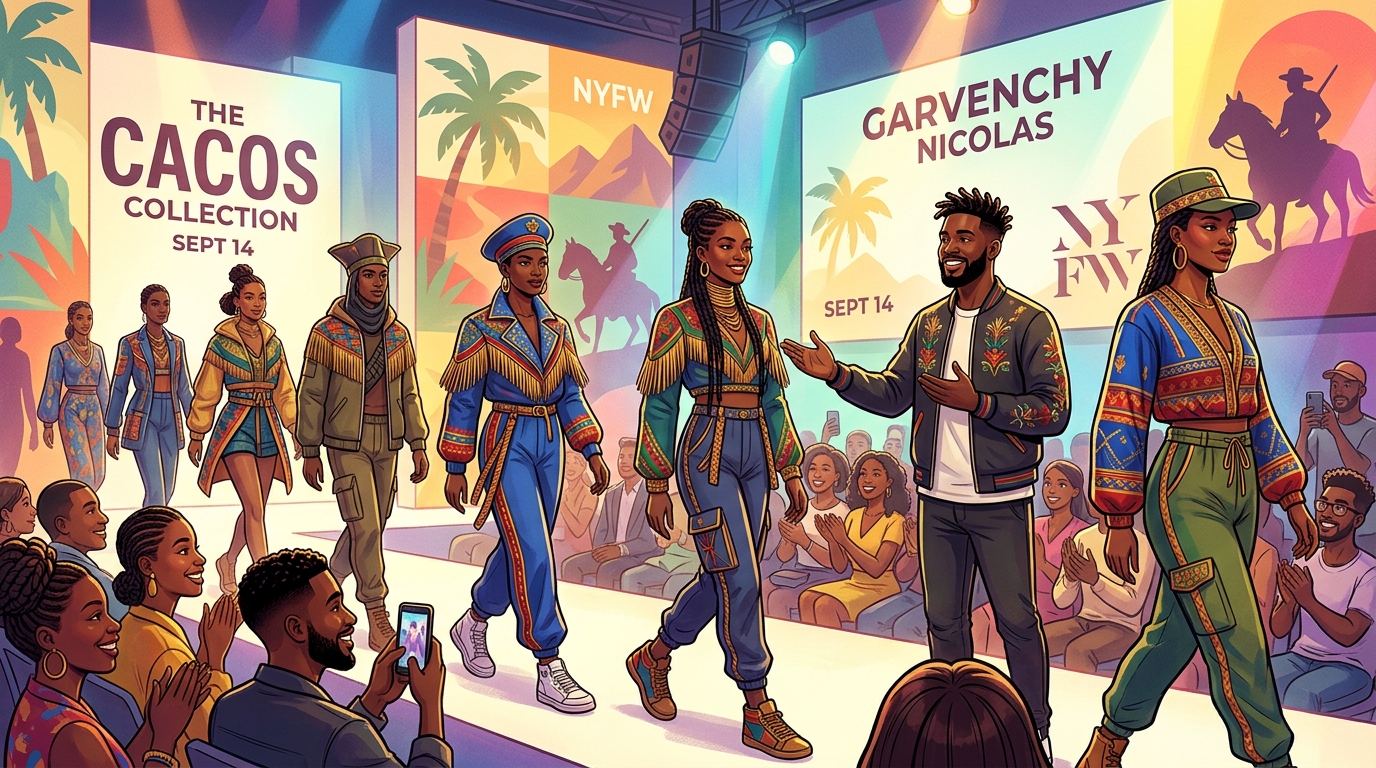
Haitian-born designer Garvenchy Nicolas unveiled his groundbreaking CACOS Collection at New York Fashion Week on September 14, honoring Haiti’s legendary resistance fighters who battled U.S. occupation from 1915-1934. The collection transforms historical struggle into wearable art, featuring vibrant colors inspired by the Cacos bird and Haiti’s mountains where guerrilla tactics were strategized. Nicolas, founder of Brooklyn-based luxury brand Vinshēk, traveled to Haiti to authentically capture the spirit of resistance and resilience.
Key Points:
- The runway show at Brooklyn’s Arches venue attracted prominent NYC leaders, including City Council Member Rita C. Joseph, who presented Nicolas with a citation
- The collection draws direct inspiration from the Cacos resistance fighters’ guerrilla warfare against U.S. occupation forces
- Nicolas’s work represents the intersection of high fashion, cultural preservation, and diaspora storytelling
Why it matters: This is diaspora excellence at its finest—a Brooklyn-based Haitian designer using one of fashion’s most prestigious platforms to educate the world about our resistance history. While mainstream narratives often erase or diminish Haitian contributions to freedom struggles, Nicolas places the Cacos fighters front and center at NYFW. For our community, this represents both cultural pride and economic achievement, showing young Haitians that our heritage is not just something to preserve but something to build innovative businesses around.
🔗 New York leads legal fight against public charge rule as Haitian immigrants brace for impact (6 minute read)
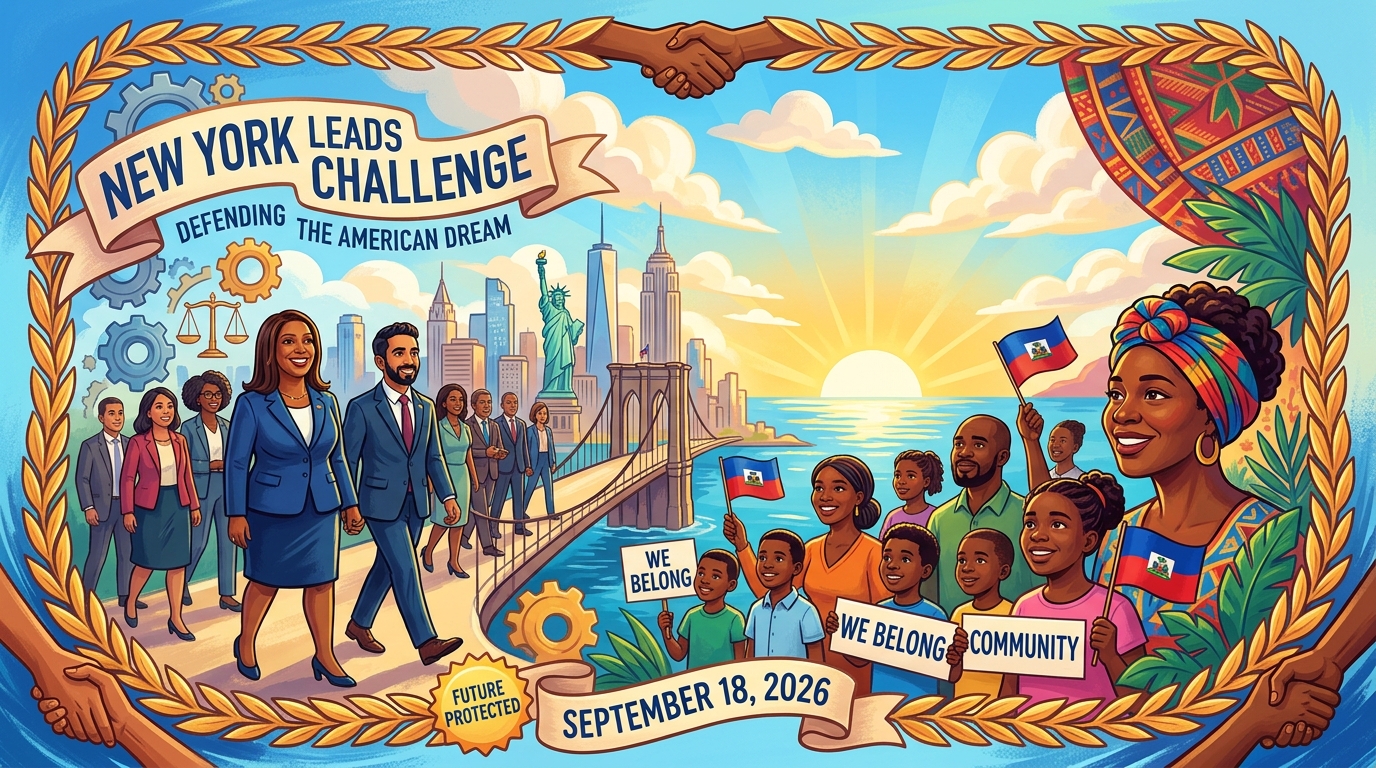
New York is leading a multi-state legal challenge against a new federal “public charge” rule set to take effect September 18, 2026. Attorney General Letitia James and Mayor Zohran Mamdani filed separate lawsuits alongside 21 states and major cities, arguing the rule unconstitutionally allows immigration officers to deny green cards based on nearly any public benefit use—even benefits used by U.S. citizen family members. The policy threatens Haitian communities already devastated by TPS loss and increased enforcement.
Key Points:
- Previous versions of the public charge rule caused 35-60% benefit disenrollment rates as families feared immigration consequences
- Officials warn the rule will cost states billions in healthcare and nutrition funding while forcing vulnerable families into emergency rooms instead of preventive care
- The rule creates a “wealth test” for immigration, disproportionately affecting working-class immigrant families
Why it matters: This represents a comprehensive legal threat to Haitian families already reeling from TPS termination. With the September 18 effective date approaching, families face impossible choices: use benefits their children qualify for and risk green card denial, or forgo healthcare and nutrition assistance. The 35-60% disenrollment rate from previous versions shows this isn’t theoretical—families will skip doctor visits and food assistance out of fear. If you or family members are in green card processes, consult an immigration attorney before the deadline to understand your specific situation.
🔥 Trending
-
TPS Termination for 350,000 Haitians: House Democratic Leader Hakeem Jeffries confirms Trump administration terminated Temporary Protected Status for nearly 350,000 Haitian and Syrian immigrants effective July 27, 2026, forcing vulnerable populations back to dangerous conditions
-
UN Security Council Vote on Haiti Gang Suppression Force: Critical September 30 vote will determine renewal of multinational security effort that has killed 1,300 gang members and improved safety perception for 50.7% of Haitians
-
South Florida Voter Registration Deadline: October 5 deadline approaches as Miami-Dade, Broward, and Palm Beach election officials launch tri-county push to boost participation in region where one in four Florida voters reside
-
PNH Human Rights Training Initiative: Acting PNH Director Vladimir Paraison addresses joint workshop emphasizing legality, necessity, proportionality, and precaution in security operations
⚡ Quick Hits
🎯 Democrats vow to resist Trump’s inflationary policies and TPS termination
House Democratic Leader Hakeem Jeffries blames Donald Trump for inflationary economic policies over the past 605 days, claiming they forced the Federal Reserve to raise interest rates for the first time in three years. Jeffries reports average families spent $4,200 more to survive in twenty months while criticizing Trump’s Iran war and resulting global energy crisis. Democrats are mounting resistance efforts against both economic policies and the TPS termination affecting Haitian families. (Read more)
🎯 What’s at stake in the UN vote on Haiti’s security future
While initial Gang Suppression Force operations show mixed results—49.5% support among Haitians—the real challenge lies ahead: mobilizing development assistance for education and healthcare, priorities identified by 69% and 67% of Haitians respectively. With no elected government since 2016 and 75% distrusting political leadership, the international community must coordinate beyond security efforts. Without sustained development funding and innovative financing mechanisms, Haiti risks becoming a transnational crime hub threatening regional stability. (Read more)
🎯 Rema celebrates Haitian culture in new “Oh No” music video
Rema continues his prolific 2026 with “Oh No,” a genre-blending single that fuses Afropop, Dancehall, hip-hop, and Zouk rhythms. The visually stunning music video, directed by Benji Allen and shot in LA’s Flower District, celebrates Haitian culture through dancing and floral imagery. The track follows his earlier release “Tea” and precedes an untitled album, marking Rema’s creative departure from traditional Afrobeats. (Read more)
🎯 Recognizing Afro-Latino history during Hispanic Heritage Month
Between the 15th and 19th centuries, European powers transported 15 times more enslaved Africans to Latin America and the Caribbean than to North America, profoundly shaping the region’s cultures. Today, approximately one-quarter of U.S. Latino adults identify as Afro-Latino, with Caribbean-rooted communities showing higher identification rates at 34%. Afro-Latino contributions span music, cuisine, and language—from salsa and reggaeton to mofongo and creole languages—including notable Haitian influences in Caribbean migration to New York City. (Read more)
🎓 Industry Insight
Understanding the Public Charge Rule: What Haitian Families Need to Know
The September 18 public charge rule creates a “wealth test” for green card applications that goes far beyond previous policy. Immigration officers can now deny permanent residency based on use of public benefits—not just by the applicant, but by their U.S. citizen family members. This means a Haitian parent applying for a green card could be denied because their American-born child receives Medicaid or SNAP benefits.
The practical impact is devastating. When similar rules were implemented previously, 35-60% of eligible families disenrolled from benefits out of fear, even when their use was legally protected. Families skipped doctor visits, pulled children from nutrition programs, and avoided preventive care. The result: more expensive emergency room visits, untreated chronic conditions, and childhood developmental delays.
What you should do now: If you or family members are in green card processes, consult an immigration attorney before September 18 to understand your specific situation. Document all benefit use and eligibility. Understand that the rule is being challenged in court by 21 states and major cities—outcomes may change. Most importantly, know that benefits used by U.S. citizen children are often protected, but individual circumstances vary. Don’t make decisions based on fear alone; get professional guidance on your family’s specific case.
❓ Question of the Day
Which story resonates most with your experience as part of the Haitian diaspora?
- A) The legal fight to protect immigrant families’ access to benefits
- B) Haitian designers and entrepreneurs celebrating our heritage on global stages
- C) Efforts to reconnect diaspora communities with African and Haitian revolutionary history
👋 Wrap Up
This week’s newsletter captures the duality of the diaspora experience—we face real policy threats that demand our attention and action, while simultaneously creating cultural moments that remind the world of our resilience and contributions. From courtrooms in New York to runways at Fashion Week to tours spanning three continents, Haitians are not just surviving but leading.
The September 18 public charge deadline and October 5 voter registration cutoff require immediate action. But Guerline Emmanuel’s vision and Garvenchy Nicolas’s collection remind us that even as we navigate these challenges, we’re building institutions, preserving heritage, and claiming our rightful place in global narratives. That’s the Haiti story that doesn’t make headlines often enough—and it’s the one we’re committed to telling.
Stay informed, stay engaged, and stay proud,
HDP Haitian Community weekly news Editor
📊 How did you like today’s email?
Enjoyed this issue?
Subscribe to get HDP Haitian Community weekly news delivered to your inbox every week.
Join 30 other subscribers • Free forever